Anyone who's lived through a Maine winter knows the drill: windows shut tight, heat running for months, and moisture with nowhere to go. That combination is exactly what mold and mildew look for, and the bathroom — already the dampest room in the house — takes the brunt of it. That's one reason Maine Luxury Bath Systems builds Microban antimicrobial protection into many of our bath and shower surfaces, and it's worth understanding what that means for your home.
If you've seen "Microban Protection" listed among our features and wondered what it does day to day, here's the breakdown.
What Microban Protection Actually Is
Microban is antimicrobial technology built directly into the surface material itself, rather than something sprayed on or applied as a coating that wears off over time. It continuously inhibits the growth of bacteria, mold, and mildew on the treated surface, helping keep it cleaner between regular cleanings.
This matters because standard bathroom surfaces — especially aging grout lines, caulk, and porous materials — are naturally hospitable to the kind of organic growth that shows up as black spots, pink film, or that persistent musty smell no amount of scrubbing seems to fully solve. Building antimicrobial protection into the surface itself, rather than relying entirely on maintenance, changes that equation from the start.
How Microban Fights Mold & Mildew in Humid Climates
Maine's climate is uniquely tough on bathrooms for a few reasons. Humid summers create moisture buildup, while sealed-up winters trap it indoors with less ventilation to clear it out. Older homes throughout Southern Maine often have bathrooms with limited exhaust fan capacity or windows that rarely get opened once the cold sets in.
That's precisely the environment where mold and mildew thrive — and where a surface with built-in antimicrobial protection makes a visible difference. Instead of fighting an uphill battle against organic growth every time humidity spikes, Microban-protected surfaces are designed to make it harder for mold and mildew to establish themselves in the first place.
For homeowners who've dealt with recurring mildew in grout lines or around fixtures no matter how often they clean, this is often the missing piece — not a cleaning product, but a surface engineered to resist the problem at the source. [INTERNAL LINK: /walk-in-tubs
Microban vs. Standard Grout and Surfaces
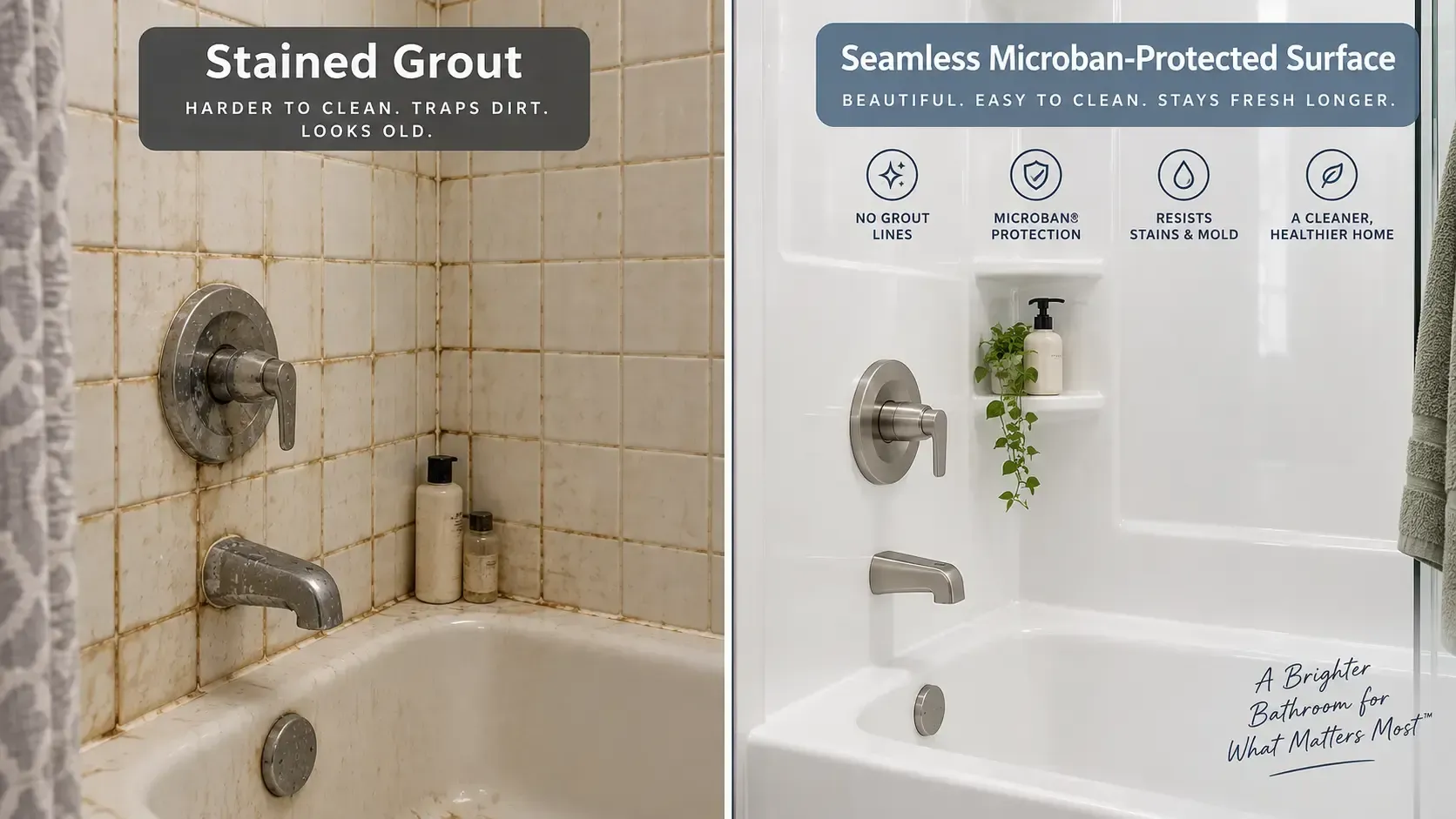
Traditional tile-and-grout bathrooms have a well-known weak point: grout is porous, and porous materials absorb moisture. Even with regular sealing, grout lines are among the first places mold and mildew show up, and they're notoriously difficult to clean once staining sets in.
Here's how that compares to a Microban-protected system:
- Standard grout: Porous, requires periodic resealing, prone to staining and mildew growth in high-moisture areas
- Standard caulk: Breaks down over time, creating gaps where moisture and grime collect
- Microban-protected surfaces: Antimicrobial protection built into the material itself, designed to inhibit growth continuously rather than relying on upkeep alone
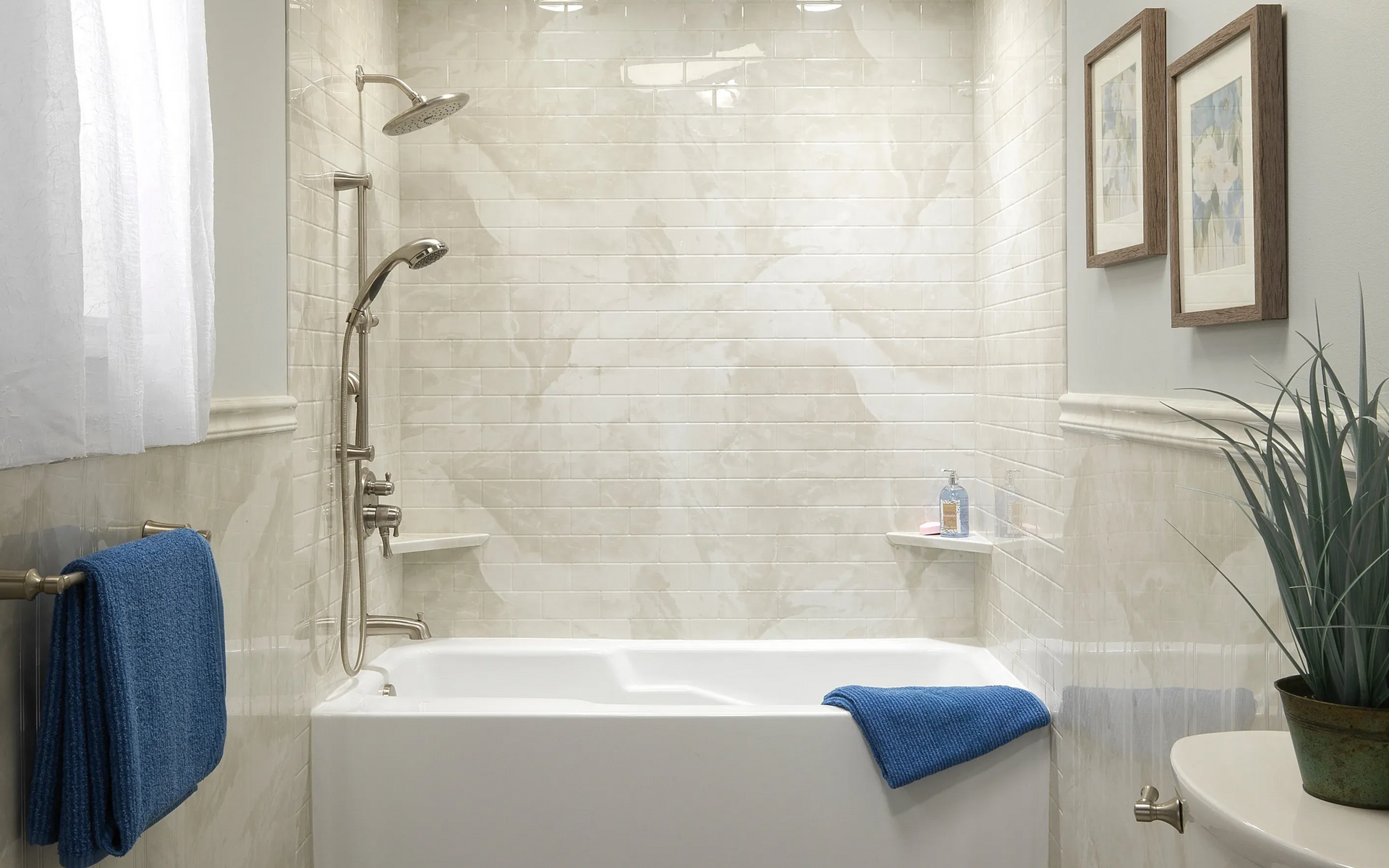
This is part of why a full bathroom conversion — rather than a patch-and-reseal approach on an aging tile bathroom — tends to hold up better over the long run in Maine's climate. [INTERNAL LINK: /tub-to-shower-conversions
Low-Maintenance Bathrooms for Maine's Damp Seasons
Beyond mold resistance, the practical upside for homeowners is simply less maintenance. A bathroom that's naturally more resistant to bacteria, mold, and mildew buildup means less scrubbing, fewer grout-replacement jobs, and less worry about what's happening behind fixtures and in corners you can't easily see.
That's especially valuable heading into fall and winter, when Maine bathrooms get less airflow and more consistent humidity from hot showers in a closed-up house. A few habits still help protect any bathroom surface, Microban-treated or not:
- Run the exhaust fan during and after showers, especially in colder months
- Wipe down surfaces periodically to clear soap scum and residue
- Address any leaks or standing water quickly
But with Microban protection built into the surface itself, homeowners don't have to rely on those habits alone to keep mold and mildew at bay.
Is Microban Protection Included in Every Project?
Microban protection is available across a number of our surface options, and your consultant can walk you through exactly which products include it during your free, no-obligation quote. If keeping your new bathroom low-maintenance and mold-resistant is a priority — which it is for most Maine homeowners — it's worth asking about specifically when you're comparing materials and finishes.
Ready for a Bathroom That's Easier to Keep Clean?
If recurring mold, mildew, or grout stains have frustrated you in your current bathroom, a remodel with Microban-protected surfaces addresses the problem at the material level, not just the surface level. [INTERNAL LINK: /free-quote "Request your free bathroom remodel quote"] and ask your consultant which Microban-protected options fit your project.